Nutritional Strategies for Enhancing Longevity: An Evidence-Based Approach
Discover mechanisms by which specific dietary patterns influence longevity and actionable self-study protocols to enhance healthy aging.

Specific Nutrients and Longevity
Recent findings suggest that specific nutrients may play a critical role in longevity. A comprehensive review highlighted how dietary patterns rich in certain nutrients can significantly influence health span and longevity. For instance, studies have shown that omega-3 fatty acids, polyphenols, and micronutrients like vitamins D and K are associated with lower mortality rates and improved health outcomes in older adults (G. Fatima et al. (2025)).
Mechanisms of Action
The mechanisms through which these nutrients exert their effects on longevity are multifaceted. Omega-3 fatty acids, for instance, are known to reduce inflammation and improve cardiovascular health, which are crucial for longevity. They enhance cell membrane fluidity and function, promoting better cellular signaling and metabolic processes. Polyphenols, found in various fruits and vegetables, exhibit antioxidant properties that protect cells from oxidative stress, a key factor in aging.
Furthermore, vitamins D and K are essential for bone health and calcium metabolism. Vitamin D also plays a role in immune function, which tends to decline with age. Ensuring adequate levels of these vitamins may mitigate age-associated diseases, thereby extending the health span.
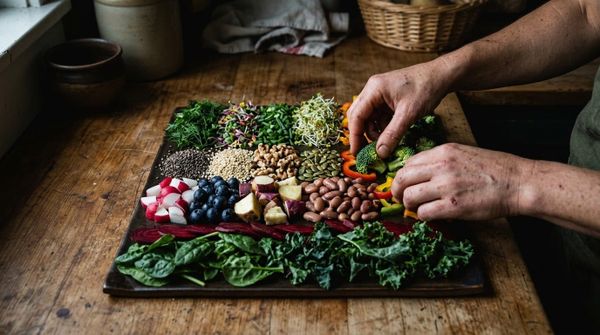
Visual representation of key nutrients associated with longevity.
Sources: https://www.semanticscholar.org/paper/17926685ae8fbf13fa901ed693d3c1a5e3bddac2 · https://www.semanticscholar.org/paper/9eb5a2b59899f88ffaa35babd994d75cd0461947
Evidence from Related Studies
Several studies converge on the importance of dietary patterns for longevity. A review of nutritional strategies for health span and longevity suggests that diets emphasizing whole foods, particularly those rich in fruits, vegetables, whole grains, and healthy fats, correlate with better health outcomes (G. Fatima et al. (2025)). Another study discusses the impact of dietary advanced glycation end products (dAGEs) on aging, suggesting that lower intake of dAGEs can lead to improved health outcomes and longevity (Paola Russo et al. (2025)).
Actionable Self-Study Protocol
To explore the effects of specific dietary patterns on longevity, we propose a 14-day self-study protocol:
- Intervention: Adopt a diet rich in omega-3 fatty acids (e.g., fatty fish, walnuts), polyphenols (e.g., berries, green tea), and vitamins D and K (e.g., leafy greens, fortified foods).
- Measurement Plan: Track biomarkers such as blood lipid profiles, inflammatory markers (e.g., CRP), and vitamin levels before and after the intervention.
- Control Window: Maintain a standard diet for 7 days before starting the intervention to establish baseline measurements.
- Null-Hypothesis Statement: There will be no significant change in the measured biomarkers after the 14-day intervention.
Caveats and Open Questions
While the evidence suggests a positive correlation between specific dietary patterns and longevity, there remain open questions. Individual responses to dietary changes can vary significantly, influenced by genetics, lifestyle, and pre-existing health conditions. Moreover, the long-term effects of dietary interventions require further study to determine causation versus correlation. Future research could explore the synergistic effects of combining different dietary strategies and their impact on various populations.
References
- Rosario Suárez, Estefanía Bautista-Valarezo, Andri Matos (2025). Obesity and nutritional strategies: advancing prevention and management through evidence-based approaches. Food and Agricultural Immunology. https://doi.org/10.1080/09540105.2025.2491597
- Naqash Goswami, Ifeanyi Solomon Ahamba, L. Kinkpe (2025). Enhancing rabbit farming efficiency with integrated genomics and nutritional strategies. Frontiers in Animal Science. https://doi.org/10.3389/fanim.2024.1514923
- G. Fatima, I. Dalmadi, Gyula Süllős (2025). Dietary Patterns for Health-Span and Longevity: A Comprehensive Review of Nutritional Strategies Promoting Lifelong Wellness. Applied Sciences. https://doi.org/10.3390/app152212013
- S. P. Suriyaraj, Dhanraj Ganapathy, Deepankumar Shanmugamprema (2025). Prehabilitation Strategies: Enhancing Surgical Resilience with a Focus on Nutritional Optimization and Multimodal Interventions. Advances in Nutrition. https://doi.org/10.1016/j.advnut.2025.100392
- H. Zmerly, I. Akkawi, M. Moscato (2025). Preoperative strategies to prevent periprosthetic joint infection after knee replacement: evidence-based recommendations for multidisciplinary practice.. Orthopedic Reviews. https://doi.org/10.52965/001c.143566
- Paola Russo, I. Sirangelo, A. Siani (2025). Dietary Advanced Glycation End Products (dAGEs): Pathogenesis and nutritional strategies for health longevity-A critical view.. NMCD. Nutrition Metabolism and Cardiovascular Diseases. https://doi.org/10.1016/j.numecd.2025.104538