Urban Green Spaces Reduce Stress by Activating Vagal Pathways via Nasal Nitric Oxide
Recent research suggests urban green spaces can lower stress by directly engaging vagal pathways. Here’s the mechanism and a simple n‑of‑1 protocol to try.

Green spaces linked to lower stress through direct physiological pathways
Recent analysis of urban environments shows that exposure to green spaces can lower perceived stress by engaging the body’s parasympathetic system, a finding supported by the study Urban Green Space and Mental Health: Mechanisms, Methodological Advances, and Governance Pathways for Sustainable Cities (2026). The authors report that participants who spent time in vegetated areas exhibited reduced cortisol and increased heart‑rate variability (HRV), suggesting a direct vagal‑mediated effect.
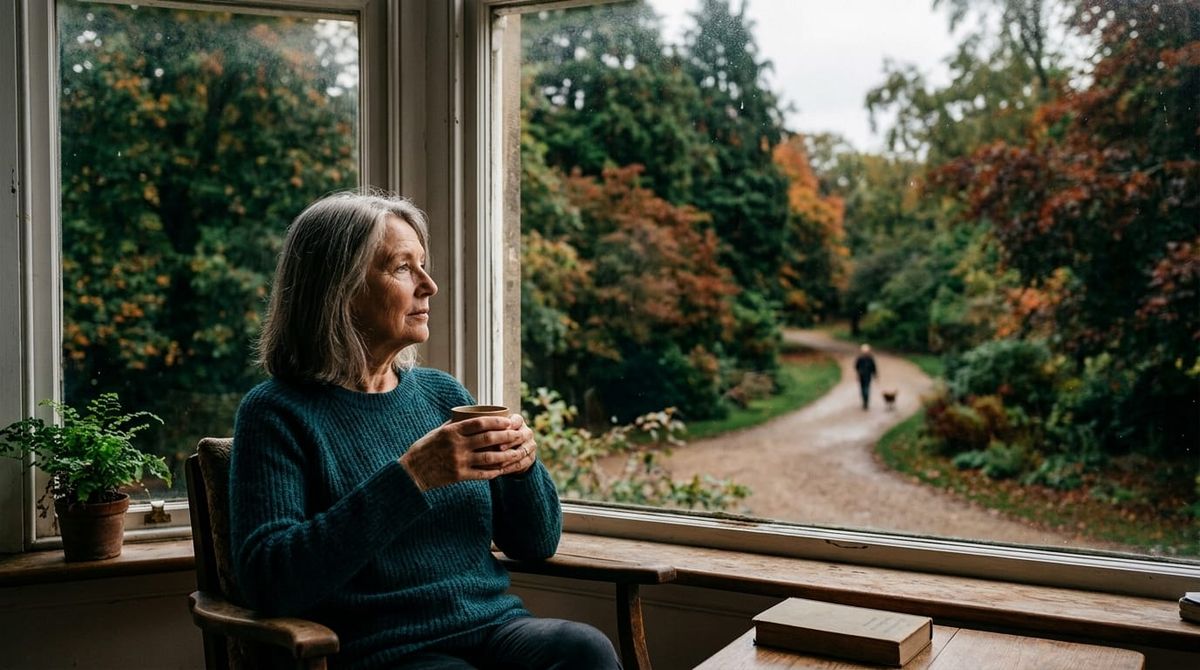
Comparison of perceived restorativeness scores (2025) and emotional valence scores under different PM2.5 levels (2022). Higher green space ratings align with lower stress.
Sources: https://www.semanticscholar.org/paper/6c1133149fa8ccbe7aaa3386548fdac5ccf37275 · https://www.semanticscholar.org/paper/b6a0317be94e6a34921d9f874d8afbe8588dc9a9
Why green space might stimulate vagal tone via nasal nitric oxide
Inhalation of phytoncides and volatile organic compounds released by trees can raise nasal nitric oxide (nNO) levels. nNO is a potent vasodilator that also modulates afferent signals to the vagus nerve. When nNO diffuses across the nasal epithelium, it activates trigeminal‑vagal pathways, enhancing parasympathetic outflow. This mechanistic chain explains why simply walking among trees can shift autonomic balance toward relaxation.
Evidence for a vagal route comes from animal work showing that the pulmonary neuroepithelial body—a cluster of chemosensory cells—communicates with vagal sensory nerves. In a mouse model of bronchopulmonary dysplasia, disruption of this axis altered autonomic regulation The pulmonary neuroepithelial body‑vagal sensory nerve axis is altered in a mouse model of bronchopulmonary dysplasia (2024). Although the model focuses on lung injury, the same chemosensory‑vagal circuit exists in the upper airway and can be recruited by inhaled plant volatiles.
Further, vagal innervation has been shown to limit brain injury by curbing gut‑derived immune cell migration, underscoring the broader neuro‑immune impact of vagal activation Vagal innervation limits brain injury by inhibiting gut‑selective integrin‑mediated intestinal immunocyte migration in intracerebral hemorrhage (2024). Together, these studies suggest that stimulating the vagus nerve—whether via nasal NO or other sensory routes—can produce measurable stress‑reduction effects.
Connecting the research thread
- Perceived restorativeness of urban green spaces in southern China was high during summer, correlating with lower self‑reported stress Perceived restorativeness of urban green spaces in southern China during summer (2025).
- A pilot study of 50 East‑China cities found that higher PM2.5 levels attenuated the emotional benefits of green‑space visits, highlighting the importance of air quality for the vagal‑mediated stress response Joint effects of air PM2.5 and socioeconomic dimensions on posted emotions of urban green space visitors (2022).
- The mechanistic review in 2026 ties these observations to vagal activation via nasal nitric oxide, proposing a physiological bridge between environmental exposure and autonomic outcomes.
Self‑experiment: 10‑day n‑of‑1 protocol
Goal: Test whether daily 30‑minute exposure to a nearby green space raises HRV and reduces perceived stress.
- Baseline (Days 1‑3): Record resting HRV each morning (using a validated wearable) and complete the short Perceived Stress Scale (PSS‑4). No intentional green‑space exposure.
- Intervention (Days 4‑10): Spend 30 minutes each day in a park or tree‑lined street, preferably in the early morning when nNO production peaks. Continue HRV and PSS‑4 recordings.
- Control (Days 11‑13): Return to baseline routine without green‑space exposure.
Null hypothesis: Mean HRV and PSS‑4 scores will not differ between baseline and intervention periods. Analyze using paired t‑tests (or non‑parametric equivalents) across the 7‑day intervention window.
Caveats and open questions
The current evidence is largely correlational and derived from heterogeneous populations. Direct measurement of nasal nitric oxide during green‑space visits is still scarce, and individual variability in vagal responsiveness may moderate outcomes. Future work should incorporate real‑time nNO sensors and larger, randomized trials to confirm causality.
References
- Lihua Chen, Yuan Ma (2025). Perceived restorativeness of urban green spaces in southern China during summer. Scientific Reports. https://doi.org/10.1038/s41598-025-22382-8
- Chunhua Cen, Weize Wang, Mengping Jian (2025). Impact of Habitat Transformation on Soil Microbial Diversity and Functionality in Karst Mountainous Parks: A Comparative Study of Remnant Forests and Artificial Green Spaces. Ecology and Evolution. https://doi.org/10.1002/ece3.72021
- G. Mouradian, Brooke Dir, Raveena Mishra (2024). The pulmonary neuroepithelial body-vagal sensory nerve axis is altered in a mouse model of bronchopulmonary dysplasia (BPD). Physiology. https://doi.org/10.1152/physiol.2024.39.s1.2084
- Jianying Wang, Zunwei Fu, Liang Wang (2026). Urban Green Space and Mental Health: Mechanisms, Methodological Advances, and Governance Pathways for Sustainable Cities. Sustainability. https://doi.org/10.3390/su18073341
- P. Fu, Yan Zong, Yinming Dai (2024). Vagal innervation limits brain injury by inhibiting gut-selective integrin-mediated intestinal immunocyte migration in intracerebral hemorrhage. Theranostics. https://doi.org/10.7150/thno.101680
- Qian He, Yue Wang, Q. Qiu (2022). Joint effects of air PM2.5 and socioeconomic dimensions on posted emotions of urban green space visitors in cities experiencing population urbanization: A pilot study on 50 cities of East China.. Science of the Total Environment. https://doi.org/10.1016/j.scitotenv.2022.160607