The Rising Interest in Integrative Health: Can Traditional Medicines Become Mainstream?
This article examines the rising interest in traditional medicines and their potential to reshape modern healthcare treatment paradigms.

Traditional Medicines Gaining Ground
Recent discussions indicate a growing trend towards integrating traditional practices into contemporary medicine. This shift is echoed in various studies highlighting the potential roles of traditional Chinese medicines in treating chronic diseases, including heart conditions associated with vascular calcification Gupta et al. (2025).
Understanding the Mechanism
The increasing interest in traditional medicines can be attributed to their holistic approach, which contrasts with the reductionist paradigm often seen in Western medicine. Traditional practices, such as acupuncture and herbal treatments, operate on the principle of restoring balance in the body. For instance, the efficacy of certain herbal remedies can be linked to their bioactive compounds, which may interact with biological pathways to exert therapeutic effects.
Connecting the Research
Several studies reinforce the potential of integrating traditional medicine into modern healthcare. The review by Acharya Balkrishna et al. (2024) discusses how herbal medicines can bridge traditional wisdom and modern science, emphasizing the need for rigorous scientific validation (2024). Additionally, a report on the contributions of traditional and complementary medicines during the COVID-19 pandemic highlights their role in supporting healthcare systems Portella et al. (2020).
Self-Study Protocol for Exploration
To explore the potential benefits of traditional medicines, readers can engage in a self-study protocol over 14 days. The protocol includes:
- Intervention: Incorporate a specific herbal remedy known for its potential cardiovascular benefits (e.g., hawthorn extract).
- Measurement Plan: Track heart rate variability (HRV) daily using a wearable device.
- Control Window: Maintain a baseline for one week prior to starting the herbal remedy.
- Null-Hypothesis Statement: There will be no significant change in HRV after 14 days of using the herbal remedy compared to the baseline.
Open Questions and Caveats
Despite the promising potential of traditional medicines, several uncertainties remain. The scientific community still seeks to understand the mechanisms behind the efficacy of these treatments fully. Additionally, variability in individual responses to herbal remedies presents challenges in establishing standardized protocols. Future research should focus on large-scale clinical trials to validate the safety and effectiveness of traditional practices within modern healthcare settings.
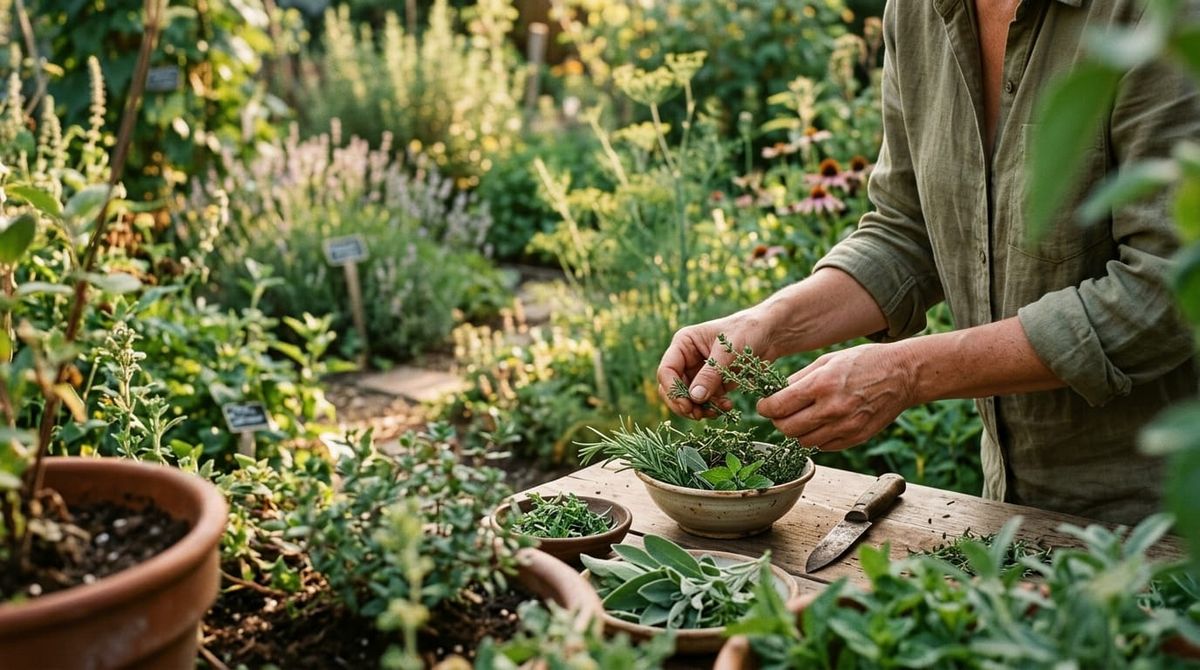
A comparison of traditional medicinal practices and their modern counterparts.
Sources: https://www.semanticscholar.org/paper/5da9b80501f006d30eceffabe227305e2876b10b · https://www.semanticscholar.org/paper/ce9c03b2b40dd437e4fdd5eb6178954eb742a248
References
- Qi Chen, Haojin Cheng, Zhao-xiang Bian (2025). Regulatory frameworks and evidence requirements for traditional, complementary and integrative medicines. Bulletin of the World Health Organization. https://doi.org/10.2471/BLT.25.293437
- Taneesh Gupta, Ankit Ankit, Pankaj Malhotra (2025). Review on the potential roles of traditional Chinese medicines in treatment of chronic heart disease associated with vascular calcification. Integrative Medicine Discovery. https://doi.org/10.53388/imd202509011
- Acharya Balkrishna, N. Sharma, D. Srivastava (2024). Exploring the Safety, Efficacy, and Bioactivity of Herbal Medicines: Bridging Traditional Wisdom and Modern Science in Healthcare. Future Integrative Medicine. https://doi.org/10.14218/fim.2023.00086
- C. Portella, Ricardo Ghelman, C. V. Abdala (2020). Evidence map on the contributions of traditional, complementary and integrative medicines for health care in times of COVID-19. Integrative Medicine Research. https://doi.org/10.1016/j.imr.2020.100473
- N. Garg, R. Sharma, Meera K. Bhojani (2026). Bridging traditional wisdom and modern science: An integrative approach to breast cancer care. Ayush Journal of Integrative Oncology. https://doi.org/10.4103/ajio.ajio_8_26
- Gary Humphreys (2025). Integrating traditional medicines into health systems. Bulletin of the World Health Organization. https://doi.org/10.2471/BLT.25.021125