Investigating Dietary Stability and Long-Term Health Outcomes
This article investigates the impact of dietary stability on long-term health outcomes, drawing on findings from the Black Women's Health Study and related research.

Insights from the Black Women's Health Study
Recent findings from the Dietary trajectories through the life course: opportunities and challenges (2022) highlight the importance of dietary stability among participants in the Black Women's Health Study. This research indicates that consistent dietary patterns are linked to improved long-term health outcomes, particularly in the prevention of chronic diseases.
Understanding the Mechanism of Dietary Stability
The stability of dietary patterns can influence health through various mechanisms. For instance, consistent nutrient intake helps maintain metabolic homeostasis, which is crucial for preventing obesity and related diseases. When individuals adhere to stable diets, they are more likely to achieve adequate intakes of essential nutrients and maintain a balanced energy intake, ultimately influencing their overall health trajectory.
Connecting Research Threads
In addition to the findings from the Black Women's Health Study, other studies support the significance of dietary consistency. The work of Berding et al. (2018) demonstrated that the fecal microbiome composition in children is associated with dietary patterns, suggesting that early dietary stability can have long-lasting effects on gut health. Furthermore, Kampouraki et al. (2017) explored the implications of dietary consistency in patients receiving long-term oral anticoagulation therapy, underscoring the need for stable diets to ensure therapeutic efficacy and minimize health risks.
Actionable Self-Study Protocol
To explore the effects of dietary stability on health outcomes, readers can conduct a self-study over a 14-day period. Here’s a suggested protocol:
- Intervention: Maintain a consistent dietary pattern focused on whole foods, including fruits, vegetables, whole grains, lean proteins, and healthy fats.
- Measurement Plan: Track daily food intake using a food diary or app, and assess health metrics such as energy levels, mood, and weight at the beginning and end of the study.
- Control Window: For the first week, maintain a typical diet to establish baseline measurements.
- Null-Hypothesis Statement: There will be no significant difference in health outcomes between the baseline and post-intervention measurements.
Caveats and Open Questions
While the evidence suggests a link between dietary stability and health outcomes, there are still unanswered questions. For instance, how do different dietary patterns interact with genetic predispositions? What role does social and environmental context play in maintaining dietary stability? Future research should aim to clarify these points to enhance our understanding of dietary impacts on long-term health.
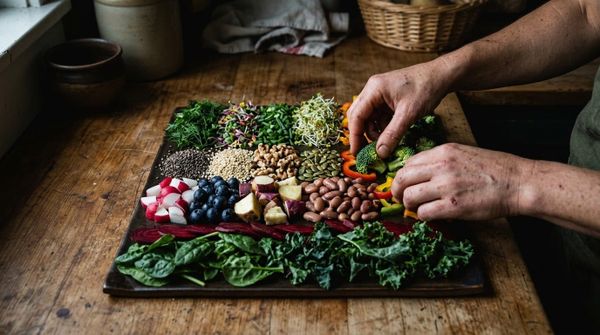
Visual representation of the relationship between dietary stability and health outcomes based on recent studies.
Sources: https://www.semanticscholar.org/paper/0f976be7267ab0779ba846ae5d54bcd8c789e58e · https://www.semanticscholar.org/paper/42ec60e31af2161375d23f771d21e0b1e3be9e99
References
- K. Berding, H. Holscher, A. Arthur (2018). Fecal microbiome composition and stability in 4- to 8-year old children is associated with dietary patterns and nutrient intake.. Journal of Nutritional Biochemistry. https://doi.org/10.1016/j.jnutbio.2018.01.002
- E. Kampouraki, F. Kamali (2017). Dietary implications for patients receiving long-term oral anticoagulation therapy for treatment and prevention of thromboembolic disease. Expert Review of Clinical Pharmacology. https://doi.org/10.1080/17512433.2017.1345622
- J. Sánchez-Hernández, S. Prati, E. Henriksen (2022). Exploring temporal patterns in fish feeding ecology: Are ontogenetic dietary shifts stable over time?. Reviews in Fish Biology and Fisheries. https://doi.org/10.1007/s11160-022-09724-9
- D. Chan, S. McGraw, K. Klein (2017). Stability of the human sperm DNA methylome to folic acid fortification and short-term supplementation. Human Reproduction. https://doi.org/10.1093/humrep/dew308
- M. F. Chong (2022). Dietary trajectories through the life course: opportunities and challenges. British Journal of Nutrition. https://doi.org/10.1017/S0007114522001295
- C. Bertoncini-Silva, J. Zingg, P. Fassini (2022). Bioactive dietary components—Anti‐obesity effects related to energy metabolism and inflammation. Biofactors. https://doi.org/10.1002/biof.1921