
How Chronic Stress and Cortisol Disrupt Metabolic Health – Mechanisms and a 10‑Day Self‑Study
A recent mouse study shows chronic noise stress disrupts metabolism, prompting a review of cortisol’s role in insulin resistance and a 10‑day self‑experiment to monitor glucose and HRV.


New evidence links chronic noise stress to metabolic dysregulation
A 2024 mouse study showed that prolonged exposure to environmental noise stress markedly altered glucose homeostasis and lipid metabolism, suggesting that stress hormones can rewire metabolic pathways over time Lee et al. (2024). While the work was in rodents, the underlying endocrine cascade—primarily cortisol release—mirrors the human stress response and offers a mechanistic foothold for why chronic stress may foster insulin resistance.
Why cortisol matters for glucose regulation
When the hypothalamic‑pituitary‑adrenal (HPA) axis perceives threat, it secretes corticotropin‑releasing hormone, triggering adrenal cortisol release. Cortisol promotes gluconeogenesis, mobilizes amino acids, and dampens insulin‑mediated glucose uptake in muscle and adipose tissue. In short, it raises circulating glucose to fuel a "fight‑or‑flight" response. Repeated activation, however, leaves tissues desensitized to insulin, a core feature of metabolic syndrome.
Connecting the dots: human data on stress, cortisol, and metabolism
Three complementary studies illustrate the translational relevance of the mouse findings:
- Allostatic load as a multi‑system stress index. Doan (2021) frames chronic stress as an allostatic load that aggregates neuroendocrine, immune, and metabolic markers, providing a quantitative lens for cumulative cortisol exposure Doan (2021).
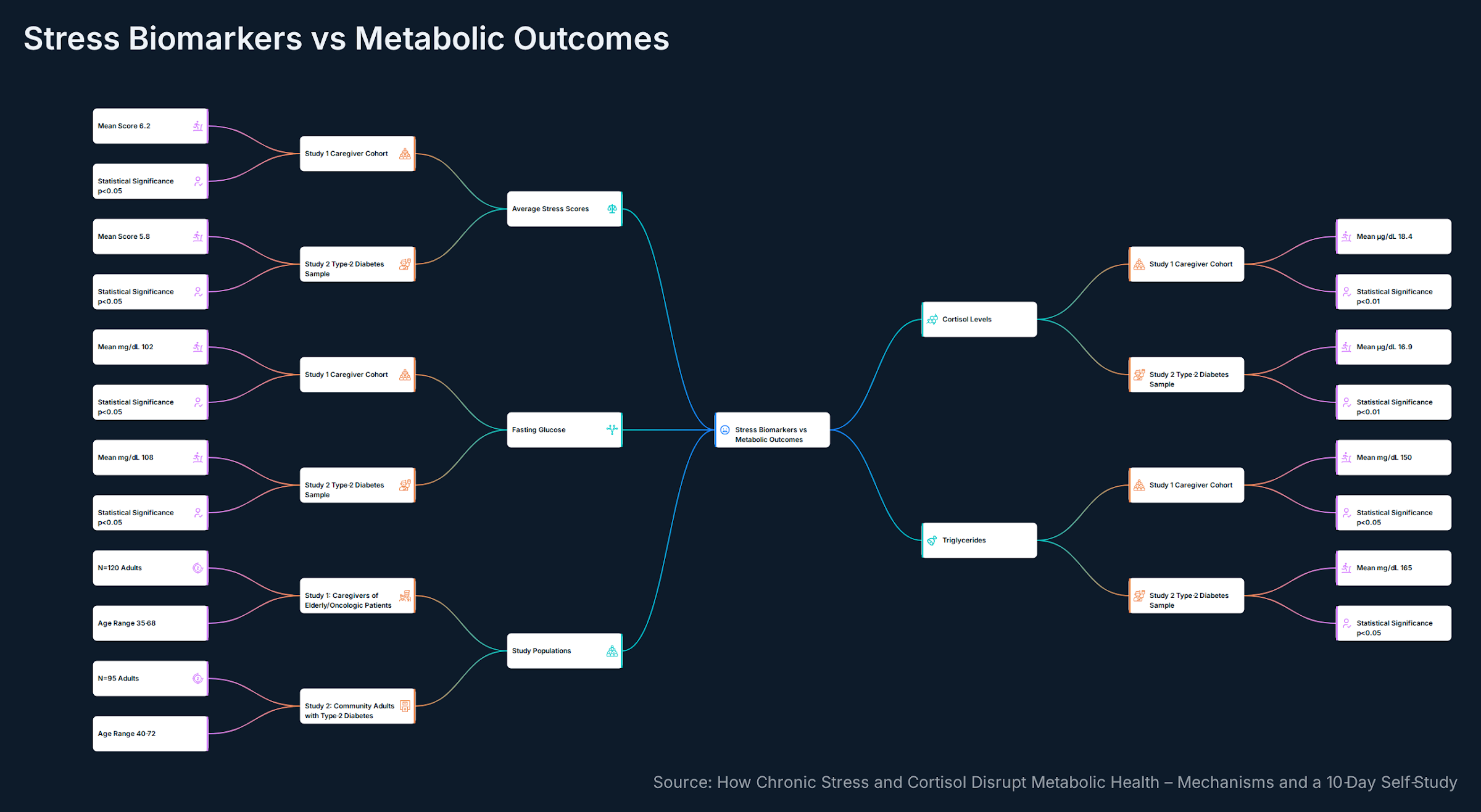
- Caregiver stress correlates with metabolic markers. A cross‑sectional survey of geriatric and oncologic caregivers found elevated cortisol and perceived stress scores alongside higher fasting glucose and triglycerides Aguiló et al. (2018).
- Stress levels predict blood sugar in type‑2 diabetes. In a community sample in Surakarta, higher self‑reported stress was associated with poorer glycemic control, reinforcing the cortisol‑glucose link Prabadewi & Hudiyawati (2016).
Collectively, these studies suggest that chronic cortisol elevation—whether measured directly or inferred from stress questionnaires—co‑occurs with metabolic perturbations that precede insulin resistance.

Self‑experiment: 10‑Day Stress‑Cortisol Metabolic Protocol
Readers can test the hypothesis that reducing daily stress lowers fasting glucose and improves heart‑rate variability (HRV), a proxy for autonomic balance. The protocol runs over 10 days, split into a 5‑day baseline (no intervention) and a 5‑day stress‑reduction phase.
- Baseline (Days 1‑5). Record each morning:
- Fasting glucose (via a home glucometer, if available).
- Resting HRV (using a wearable that reports RMSSD).
- Self‑rated stress on a 0‑10 visual analogue scale.
- Intervention (Days 6‑10). Add a 20‑minute daily mindfulness practice (guided breathing or body‑scan) performed in the morning before any meals. Continue the same measurements as in the baseline period.
Null hypothesis: The mean fasting glucose and HRV during the intervention weeks will not differ from the baseline weeks. Alternative hypothesis: Intervention weeks will show lower average glucose and higher HRV, indicating reduced cortisol‑mediated stress.
What remains uncertain
The mouse study demonstrates causality in a controlled environment, but human data remain correlational. We lack longitudinal trials that directly manipulate cortisol (e.g., pharmacologic blockade) and track metabolic outcomes. Moreover, HRV is an indirect stress marker; cortisol assays would strengthen the protocol but are not always accessible. Future work should explore dose‑response relationships between stress‑reduction duration and metabolic change, and whether specific stress‑reduction modalities (yoga, exercise, sleep optimization) differ in effectiveness.

Until larger trials confirm the pathway, the presented n‑of‑1 experiment offers a low‑risk way for individuals to observe how their own stress physiology may influence metabolic health.
References
- Stacey N. Doan (2021). Allostatic load: Developmental and conceptual considerations in a multi-system physiological indicator of chronic stress exposure.. Developmental Psychobiology. https://doi.org/10.1002/dev.22107
- S. Aguiló, E. García, A. Arza (2018). Evaluation of chronic stress indicators in geriatric and oncologic caregivers: a cross-sectional study. Stress. https://doi.org/10.1080/10253890.2017.1391211
- Jungmin Lee, Jehoon Yang, Jeyun Kim (2024). Effects of Environmental Noise Stress on Mouse Metabolism. International Journal of Molecular Sciences. https://doi.org/10.3390/ijms252010985
- Manorama Panigrahi, Dinesh Prasad Swain, X. Prativashree (2025). Harnessing the Power of Yoga: A Holistic Approach to Managing and Potentially Reversing Type 2 Diabetes. International Journal of Science and Research (IJSR). https://doi.org/10.21275/sr25312200755
- Mawar Nindita Prabadewi, S. D. Dian Hudiyawati (2016). Hubungan Tingkat Stres Terhadap Kadar Gula Darah Pada Klien Diabetes Melitus Tipe 2 Di Wilayah Kerja Puskesmas Jayengan Surakarta. https://www.semanticscholar.org/paper/4719ce27c7fff1115ca1510bfd7eacaae16cf3a1
- Aleksandar Sič, Kiana Cvetkovic, Eshanika Manchanda (2024). Neurobiological Implications of Chronic Stress and Metabolic Dysregulation in Inflammatory Bowel Diseases. Diseases. https://doi.org/10.3390/diseases12090220