
Environmental Toxicants, Chronic Inflammation, and Immune Function: A Self‑Experiment Blueprint
Recent findings show that common environmental toxicants can reshape cytokine production. We break down the biology and give a practical protocol you can try at home.


Environmental Toxicants Trigger Pro‑inflammatory Cytokine Release
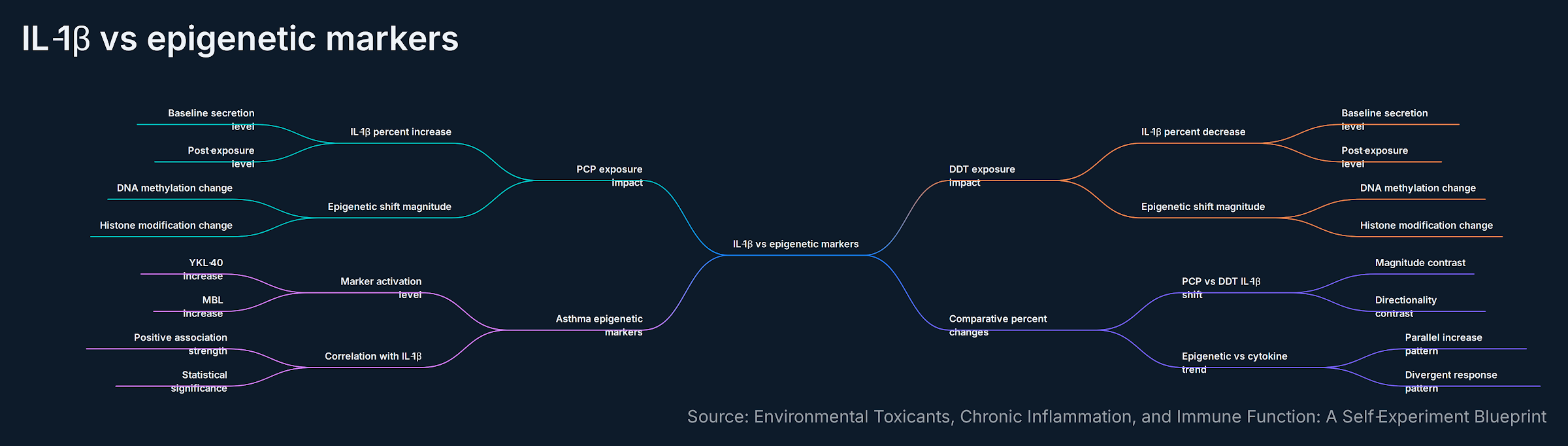
New research highlights the link between environmental exposures and immune system dysfunction. In a 2016 study, exposure of human immune cells to the persistent pollutants pentachlorophenol (PCP) and dichlorodiphenyltrichloroethane (DDT) altered secretion of interleukin‑1‑beta (IL‑1β), a key driver of chronic inflammation Exposures to the Environmental Toxicants Pentachlorophenol (PCP) and Dichlorodiphenyltrichloroethane (DDT) Modify Secretion of Interleukin 1-Beta (IL-1β) from Human Immune Cells (2016). This mechanistic clue suggests that everyday chemical exposures may tip the immune balance toward a persistently activated state.
Mechanistic Pathways Linking Exposure to Immune Dysregulation
Both PCP and DDT are known to interfere with nuclear receptors that govern gene expression. When these receptors are perturbed, epigenetic marks—such as DNA methylation and histone modifications—can shift, leading to altered transcription of cytokine genes. A complementary 2022 investigation of asthma patients demonstrated that epigenetic regulation directly modulates immune function, changing the expression of genes that control cytokine production Epigenetic Regulation of Immune Function in Asthma (2022). Together, these findings outline a two‑step pathway: (1) toxicant exposure perturbs receptor signaling; (2) the resulting epigenetic reprogramming skews cytokine output, fostering chronic low‑grade inflammation.
Connecting the Dots: Asthma, COPD, and the Microbiome
Chronic inflammatory signaling does not stay confined to the bloodstream. In COPD, accelerated lung aging is linked to molecular remodeling of airway tissues. A 2025 review described how environmental insults hasten senescence of lung epithelial cells, amplifying inflammatory cascades A tale as old as time – the importance of accelerated lung aging in chronic obstructive pulmonary disease (2025). The same authors later integrated YKL‑40, mannose‑binding lectin (MBL), and epigenetic biomarkers, showing that these markers rise in both asthma and COPD after exposure to pollutants From Airway Inflammation to Molecular Remodeling: Integrating YKL‑40, MBL and Epigenetic Biomarkers in Asthma and COPD (2026).
Beyond the lungs, gut microbiota also shape systemic immunity. A 2019 review highlighted how microbial metabolites influence T‑cell differentiation during inflammation and autoimmunity Gut Microbiota Regulation of T Cells During Inflammation and Autoimmunity (2019). Environmental chemicals can disrupt microbial composition, providing a third conduit by which external exposures amplify immune activation.

Self‑Experiment Protocol (7‑14 Days)
We propose a short n‑of‑1 trial that lets readers observe whether reducing personal exposure to known toxicants dampens their inflammatory signal. The protocol is designed for individuals with access to a wearable HRV monitor and a basic indoor‑air quality sensor (e.g., a particulate matter or VOC detector).
- Baseline week (Days 1‑7): Record resting HRV each morning (first 5 minutes after waking). Log any “inflammatory symptoms” (joint ache, fatigue, headache) on a 0‑5 scale. Keep indoor air quality sensor readings logged.
- Intervention week (Days 8‑14): Implement two exposure‑reduction steps:Continue HRV and symptom logging. Note any change in sensor‑reported VOC levels.
- Replace any household pest‑control products with non‑chemical alternatives (e.g., traps).
- Run a high‑efficiency particulate air (HEPA) purifier in the bedroom for at least 8 hours nightly.
- Null hypothesis: There is no difference in average nightly HRV or symptom scores between baseline and intervention weeks.
Statistical analysis can be as simple as a paired t‑test (or non‑parametric Wilcoxon signed‑rank test) on the two 7‑day series. A meaningful increase in HRV (≥5 % rise) together with a drop in symptom scores would support the idea that reducing toxicant exposure improves autonomic balance, a surrogate for lower systemic inflammation.

Limitations and Open Questions
The evidence linking environmental chemicals to immune dysregulation is still emerging. Most cellular studies, including the PCP/DDT work, use isolated immune cells rather than whole‑body exposures. Long‑term epidemiologic data on chronic disease outcomes remain sparse, and individual susceptibility (e.g., genetic polymorphisms in detoxification pathways) likely modulates response. Future research should address:
- Whether short‑term reductions in indoor pollutants translate to measurable changes in circulating cytokines (IL‑1β, IL‑6, TNF‑α).
- The role of gut microbiota composition as a mediator between inhaled chemicals and systemic immunity.
- Potential synergistic effects of multiple low‑level exposures versus single‑chemical studies.
Until larger trials clarify these pathways, self‑experiments like the one outlined above can provide personal insight while contributing anecdotal data to the broader longevity community.
References
- Sunita Sharma, Ivana V. Yang, D. Schwartz (2022). Epigenetic Regulation of Immune Function in Asthma. Journal of Allergy and Clinical Immunology. https://doi.org/10.1016/j.jaci.2022.06.002
- Tamara J. Martin, M. Whalen (2016). Exposures to the Environmental Toxicants Pentachlorophenol (PCP) and Dichlorodiphenyltrichloroethane (DDT) Modify Secretion of Interleukin 1-Beta (IL-1β) from Human Immune Cells. Archives of Toxicology. https://doi.org/10.1007/s00204-016-1829-1
- Carolyn J Wang, Janice M. Leung, DD Sin (2025). A tale as old as time – the importance of accelerated lung aging in chronic obstructive pulmonary disease. Expert Review of Respiratory Medicine. https://doi.org/10.1080/17476348.2025.2492800
- Simona Maria Borta, A. Crișan, R. Popețiu (2026). From Airway Inflammation to Molecular Remodeling: Integrating YKL-40, MBL and Epigenetic Biomarkers in Asthma and COPD. Biomolecules. https://doi.org/10.3390/biom16081114
- N. Eaton-Fitch, E. Sasso, S. Marshall-Gradisnik (2025). Immune transcriptomic changes in Australian Gulf War veterans. PLoS ONE. https://doi.org/10.1371/journal.pone.0338198
- Eric Michael Brown, Douglas J. Kenny, R. Xavier (2019). Gut Microbiota Regulation of T Cells During Inflammation and Autoimmunity.. Annual Review of Immunology. https://doi.org/10.1146/annurev-immunol-042718-041841