
Disrupted Sleep Dampens T‑Cell Responsiveness: Circadian Mechanisms and a 10‑Day Self‑Study
Disrupted sleep patterns can impair T‑cell responsiveness. We explain the mechanisms, connect recent research, and provide a 10‑day self‑experiment to test your own circadian immune rhythm.

News Hook: Sleep Disruption Links to Weaker T‑Cell Responses
Recent modeling of shift‑work schedules shows that altered sleep‑wake cycles are associated with reduced T‑cell proliferation and cytokine output, suggesting a mechanistic bridge between chronic fatigue and immune hypo‑responsiveness Modeling the circadian regulation of the immune system (2020).
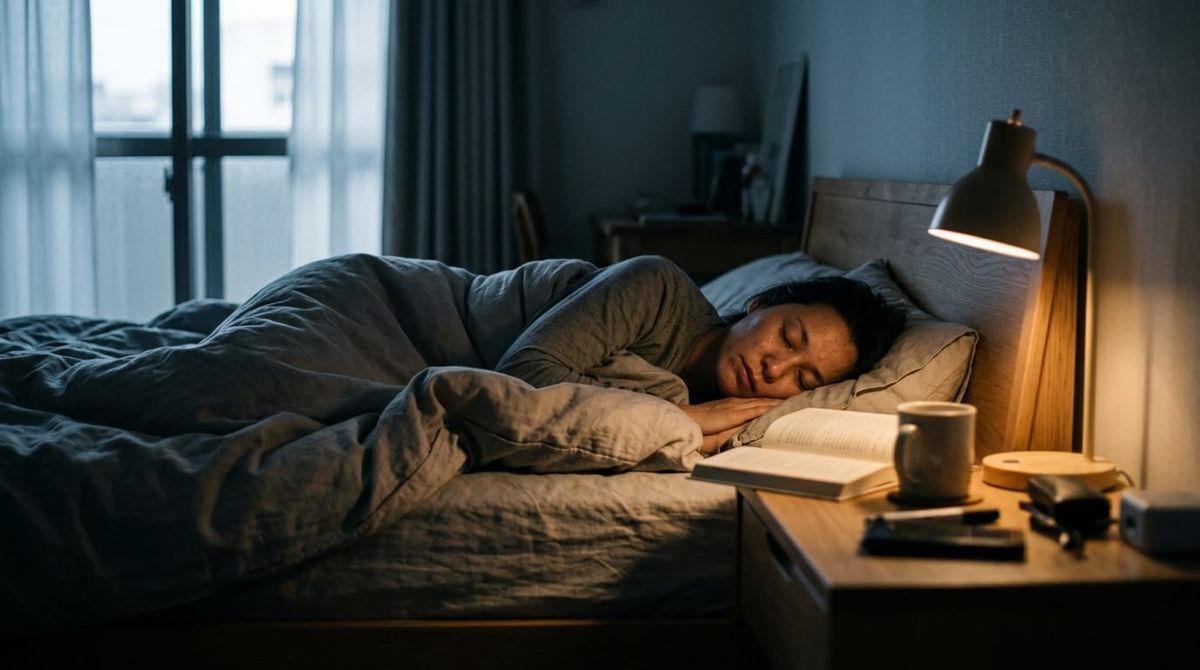
Illustrates how T‑cell proliferation peaks during the early day and declines after sleep disruption, integrating data from shift‑work modeling and gut microbiota rhythm studies.
Sources: https://www.semanticscholar.org/paper/0fce350c9d78c4956d1c73ff527d1189de1a70ad · https://www.semanticscholar.org/paper/8ef85237dffbf271b36ea7eb188400dad44268ff
Why the Clock Controls T‑Cell Activity
Core clock genes—BMAL1, CLOCK, PER, and CRY—oscillate every ~24 hours and drive transcription of downstream metabolic pathways in lymphocytes. When these oscillations are misaligned, the transcriptional program that fuels cell‑cycle entry and cytokine synthesis is blunted. In T‑cells, BMAL1 directly regulates the expression of IL‑2 and IFN‑γ, key cytokines for proliferation and antiviral defense. Consequently, a night of delayed or fragmented sleep can shift the peak of cytokine production away from the usual early‑day window, lowering overall responsiveness.
Connecting the Dots: Three Recent Studies
- Shift‑work modeling demonstrated sex‑specific reductions in immune cell counts when sleep timing was misaligned, highlighting the causal role of circadian disruption (2020).
- Gut microbiota rhythms act as an upstream regulator: microbial metabolites oscillate with feeding time and modulate host immune signaling, meaning that irregular eating can amplify sleep‑related immune deficits (2025).
- Glial‑sleep coupling shows that astrocytic calcium waves synchronize neuronal firing to the circadian clock, providing a neuro‑immune conduit that impacts peripheral T‑cell function (2025).
Self‑Experiment: 10‑Day n‑of‑1 Protocol
We propose a simple, wearable‑friendly protocol to test how your own sleep timing influences T‑cell activity.
- Baseline (Days 1‑3): Maintain your usual sleep schedule. Each morning, collect a finger‑prick blood spot for a rapid T‑cell activation assay (e.g., flow‑cytometry‑based CD69 expression) and log HRV.
- Intervention (Days 4‑7): Shift bedtime 2 hours later while keeping total sleep duration constant (e.g., 23:00 → 01:00). Continue daily blood spot and HRV measurements.
- Recovery (Days 8‑10): Return to your original bedtime. Keep measurements ongoing.
Null hypothesis: The shifted sleep window does not change average CD69 expression or HRV compared with baseline.
Analyze data with paired t‑tests (baseline vs. intervention) and visualise trends. A consistent drop in CD69 (≥15 % relative decline) paired with reduced HRV would support the circadian‑immune link.
What Remains Unclear
While modeling and microbiome studies suggest a causal pathway, the exact magnitude of T‑cell suppression in real‑world chronic‑fatigue patients is still unknown. Sex differences, age‑related clock drift, and dietary timing may all modulate the effect. Future work should integrate longitudinal immune phenotyping with actigraphy to map individual circadian immunograms.
References
- Zitong Zhao, Siyang Wu, Tingting Wang (2025). Gut microbiota circadian rhythms: a key regulator of immunometabolic homeostasis. Acta Biochimica et Biophysica Sinica. https://doi.org/10.3724/abbs.2025220
- Yen-Chun Koh, Chun-che Chang, Min-Hsiung Pan (2026). Gut Microbiota-Mediated Modulation of Circadian Rhythms: Physiological and Molecular Impacts of Dietary Composition and Feeding Time. Journal of Food and Drug Analysis. https://doi.org/10.38212/2224-6614.3596
- S. Abo, A. Layton (2020). Modeling the circadian regulation of the immune system: Sexually dimorphic effects of shift work. bioRxiv. https://doi.org/10.1371/journal.pcbi.1008514
- Jia Li, R. Su, Yuyun Lin (2026). Targeted Sedation And Circadian Interventions In Mechanically Ventilated ICU Patients: A Narrative Review.. Journal of Visualized Experiments. https://doi.org/10.3791/71310
- Teruhisa Miike, K. Oniki, M. Toyoura (2024). Disruption of Circadian Sleep/Wake Rhythms in Infants May Herald Future Development of Autism Spectrum Disorder. Clocks & Sleep. https://doi.org/10.3390/clockssleep6010012
- Catarina Cavalhas-Almeida, A. Sehgal (2025). Glia: the cellular glue that binds circadian rhythms and sleep. Sleep. https://doi.org/10.1093/sleep/zsae314