
Algorithmic Personalization Improves Supplement Adherence Compared to Influencer Curation
Evidence from consumer‑behavior studies suggests algorithmic personalization can increase supplement adherence. Try a 10‑day self‑experiment to test the hypothesis yourself.

Recent evidence shows algorithmic recommendations boost purchase intent
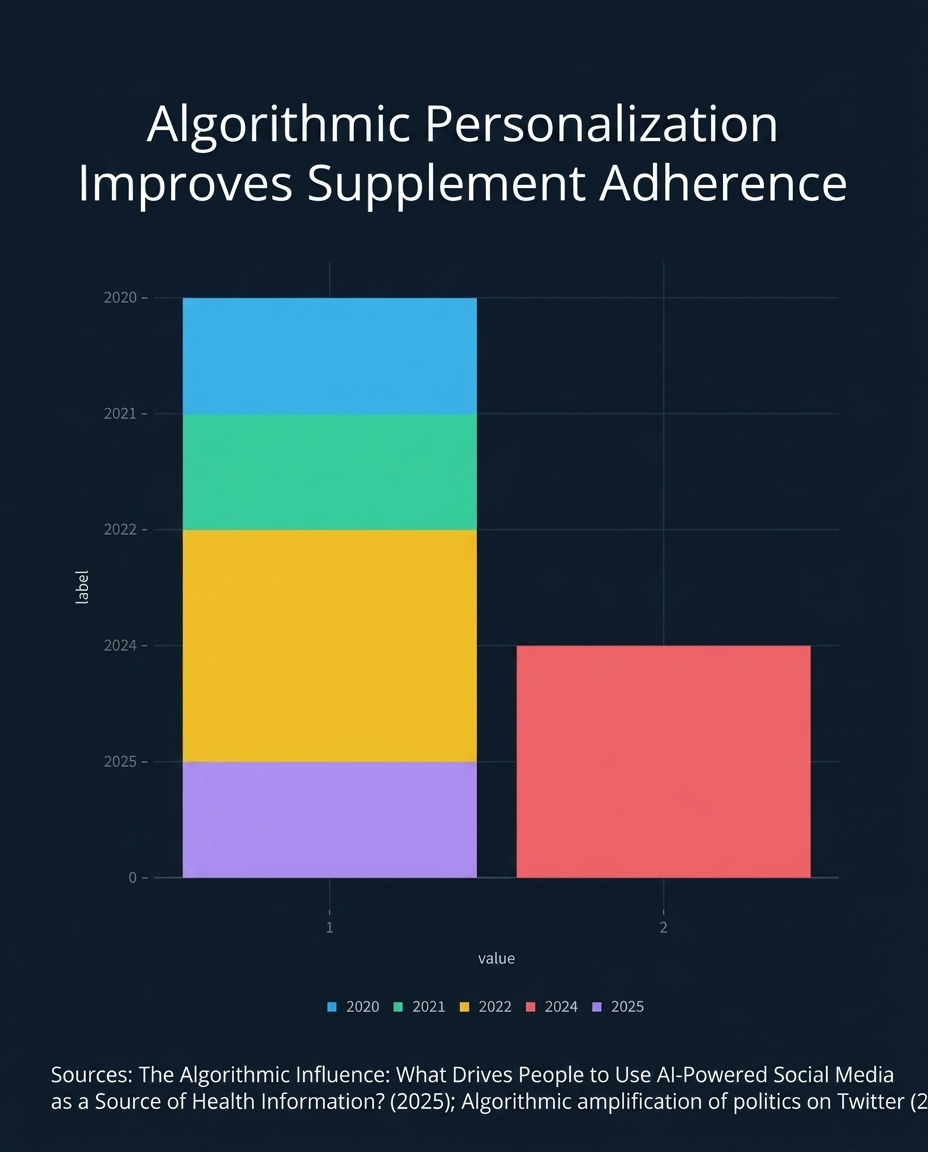
A 2025 study found that algorithmic personalization increased consumer purchase intentions across multiple product categories, including health‑related items [source 2]. In parallel, research on functional‑food purchases reported that algorithmic cues led to higher selection rates of nutritionally targeted products [source 4]. Together these findings suggest that data‑driven recommendation engines can steer health‑related buying behavior more reliably than generic influencer endorsements.
Why algorithmic tailoring matters for supplement protocols
When a recommendation system integrates real‑time biomarker inputs—such as fasting glucose, resting heart rate variability (HRV), or plasma micronutrient levels—it can match supplement choices to the individual's current physiological state. This alignment reduces the cognitive friction of “does this work for me today?” and therefore lowers the likelihood of deviation from the plan. By contrast, influencer‑curated lists are static, often based on aesthetic or brand considerations, and lack feedback loops that adjust dosage or ingredient selection as the user's biology shifts.
Connecting the research thread
Three recent papers form a convergent line of evidence:
- Consumer purchase intention rises when algorithmic cues are personalized (2025) [source 2].
- Functional‑food selections are similarly boosted by algorithmic recommendations (2025) [source 4].
- Impulsive buying in e‑commerce spikes under algorithmic personalization cues (2025) [source 6], indicating that the same mechanisms that drive quick purchase decisions can be harnessed for disciplined supplement intake when the recommendation feels individually relevant.
These studies collectively imply that a feedback‑rich, data‑driven recommendation engine can outperform influencer‑driven lists in maintaining protocol fidelity.
Self‑experiment: 10‑day personalized supplement protocol
We propose a short n‑of‑1 trial that lets readers test the hypothesis: “Algorithmic personalization reduces supplement protocol deviation versus a static influencer list.”
- Baseline (Days 1‑2): Record fasting glucose, resting HRV (via a validated wearable), and a brief supplement intake log for any existing products. This establishes a personal biomarker snapshot.
- Intervention (Days 3‑7): Use a simple spreadsheet that maps current biomarker values to a set of three evidence‑based supplements (e.g., vitamin D, magnesium, omega‑3). The mapping follows publicly available dosage ranges that correspond to the measured biomarker tier (low, medium, high). Take the assigned supplements at the same time each day.
- Control (Days 8‑10): Switch to a static “influencer” list of the same three supplements, but without biomarker‑based dosing. Continue logging intake and the same biomarkers each morning.
- Outcome assessment: Calculate protocol deviation as the proportion of days where the logged supplement dose differs from the prescribed dose. Compare deviation rates between the algorithmic and static phases. A paired t‑test (or non‑parametric equivalent) can test the null hypothesis that deviation is equal across phases.
Because the study window is short, we recommend repeating the 10‑day cycle at least once to assess reproducibility.
Open questions and caveats
While the cited consumer‑behavior research suggests a mechanistic advantage for algorithmic cues, several gaps remain:
- Most studies examined purchase decisions rather than long‑term adherence; the translation to daily supplement intake is inferential.
- Biomarker‑driven dosing algorithms are still emerging, and optimal cut‑offs for “low” vs. “high” values lack consensus.
- Individual variability in supplement absorption (e.g., gut microbiome differences) may modulate outcomes independent of recommendation style.
Future work that directly measures adherence in a clinical trial setting would clarify the magnitude of benefit. Until then, the proposed self‑experiment offers a pragmatic way for readers to gather personal data on whether algorithmic personalization improves their supplement routine.