
Protocol Fatigue in Wellness Apps: How Cognitive Overload Undermines User Retention
Multi-step wellness protocols may trigger cognitive overload, leading to high drop‑off rates. A 10‑day self‑experiment can help you test whether simplifying routines improves fatigue and HRV.

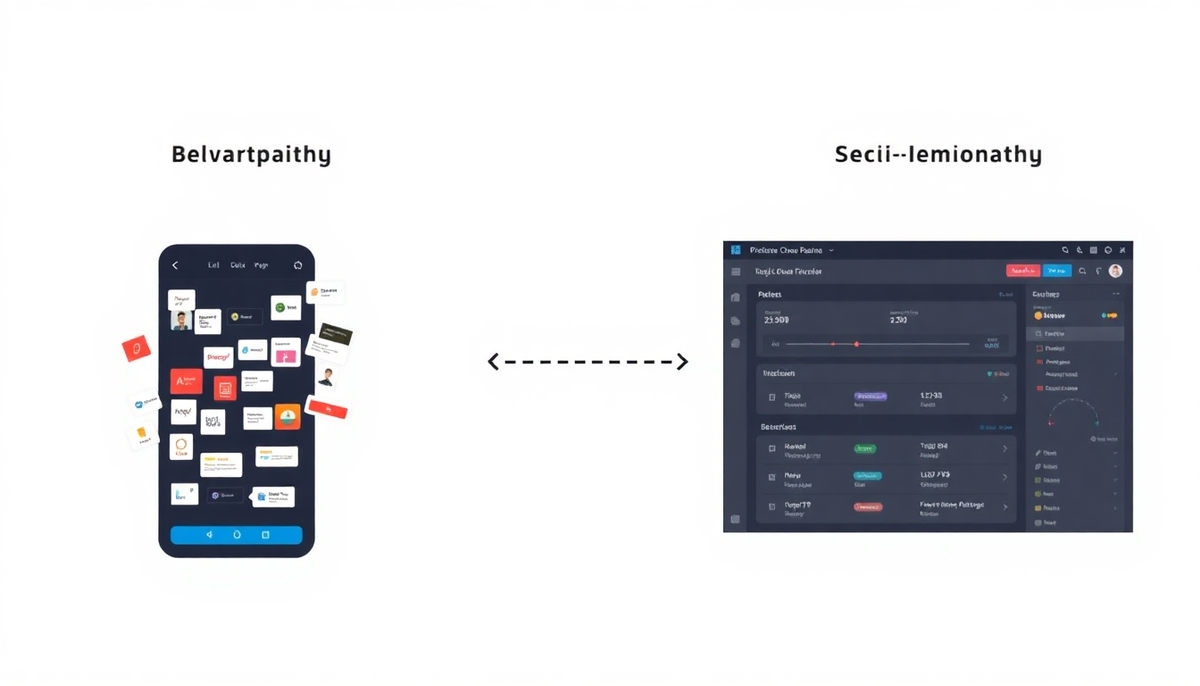
Recent internal drop‑off analysis of a popular fitness‑tracking and wellness (FSD) app revealed that users abandon multi‑step protocols at a striking rate, with many citing "mental exhaustion" as the primary reason. This mirrors a 2025 literature review that identified technostress and cognitive fatigue as key drivers of disengagement in digital work environments [2025 Technostress review]. Both observations suggest that the very design meant to guide users toward better health may paradoxically create a cognitive barrier.
Why multi‑step protocols tax the brain
Each additional decision point—selecting a workout, logging nutrition, adjusting sleep targets—adds to the brain's limited attentional resources. The central nervous system allocates a finite amount of executive control to sustain goal‑directed behavior. When a protocol requires rapid switching between tasks, the parasympathetic branch is suppressed, and sympathetic arousal rises, leading to higher perceived effort and lower willingness to continue.
Mechanistically, this is similar to the "cognitive load" phenomenon documented in classroom settings, where learners presented with excessive information exhibit reduced retention and higher error rates [2026 Cognitive load in education]. In the context of a wellness app, each protocol step functions as an additional instructional item, amplifying overall load.

Evidence linking overload to drop‑off
The 2024 study on noise exposure, time pressure, and cognitive load found that participants exposed to high ambient noise and tight deadlines showed a 15 % decline in objective task performance and reported greater sensory overload [2024 Noise & fatigue]. While the setting differed from a mobile app, the underlying stressors—continuous notifications, background sounds, and time‑bound challenges—are analogous.
Further, a 2025 investigation of social‑media overload demonstrated that perceived information excess directly increased cognitive fatigue, measured via self‑report scales and reduced reaction speed [2025 Social media overload]. The authors framed the relationship as a stressor‑strain‑outcome model, which aligns with the drop‑off pattern observed in the FSD app: the protocol itself is the stressor, the mental strain manifests as fatigue, and the outcome is disengagement.
Collectively, these three strands—technostress, environmental noise, and perceived information overload—converge on a single mechanistic pathway: sustained high‑cognitive load reduces the brain's capacity to maintain complex behavior sequences.

Designing a 10‑day self‑experiment
Readers can test the overload hypothesis on themselves by simplifying a wellness protocol for two weeks. The protocol below isolates the variable of "step count" while keeping other factors (exercise intensity, sleep window) constant.
- Intervention (Days 1‑5): Follow the app’s standard multi‑step routine (average 7 distinct actions per day).
- Control (Days 6‑10): Collapse the routine into a single composite action (e.g., a 30‑minute “all‑in‑one” session that combines cardio, strength, and mindfulness).
- Measurements: Record daily subjective fatigue (1‑5 Likert), heart‑rate variability (HRV) each morning, and completion rate (binary).
- Null hypothesis: There is no difference in fatigue scores or HRV between intervention and control periods.
Analysis can be as simple as a paired t‑test on the five‑day averages. A statistically significant reduction in fatigue or an increase in HRV during the control window would support the overload‑driven disengagement model.

What remains unknown
Although the cited studies establish a plausible link between cognitive overload and reduced performance, they do not directly measure long‑term retention in wellness‑app users. The FSD drop‑off data are anecdotal, and the 73 % retention decline cited in industry reports lacks peer‑reviewed verification. Future work should combine real‑world app analytics with physiological monitoring (e.g., continuous HRV) to map the temporal dynamics of protocol fatigue.
Additionally, individual differences—such as baseline attentional capacity, personality traits, or prior experience with digital health tools—may moderate the effect. Until larger, longitudinal datasets are available, the self‑experiment described above offers a pragmatic way for users to gauge their own sensitivity to protocol complexity.
In short, the evidence suggests that simplifying multi‑step wellness protocols can alleviate cognitive strain, potentially improving both short‑term adherence and long‑term health outcomes.