
Neuroplasticity‑Driven Protocol Design to Slash the 45‑Day Compliance Cliff by 60% Over 90 Days
A structured 90‑day supplement plan leverages neuroplasticity, standardized cues, and community feedback to target a 60% reduction in the notorious day‑45 compliance cliff.

Why a Structured Framework Matters
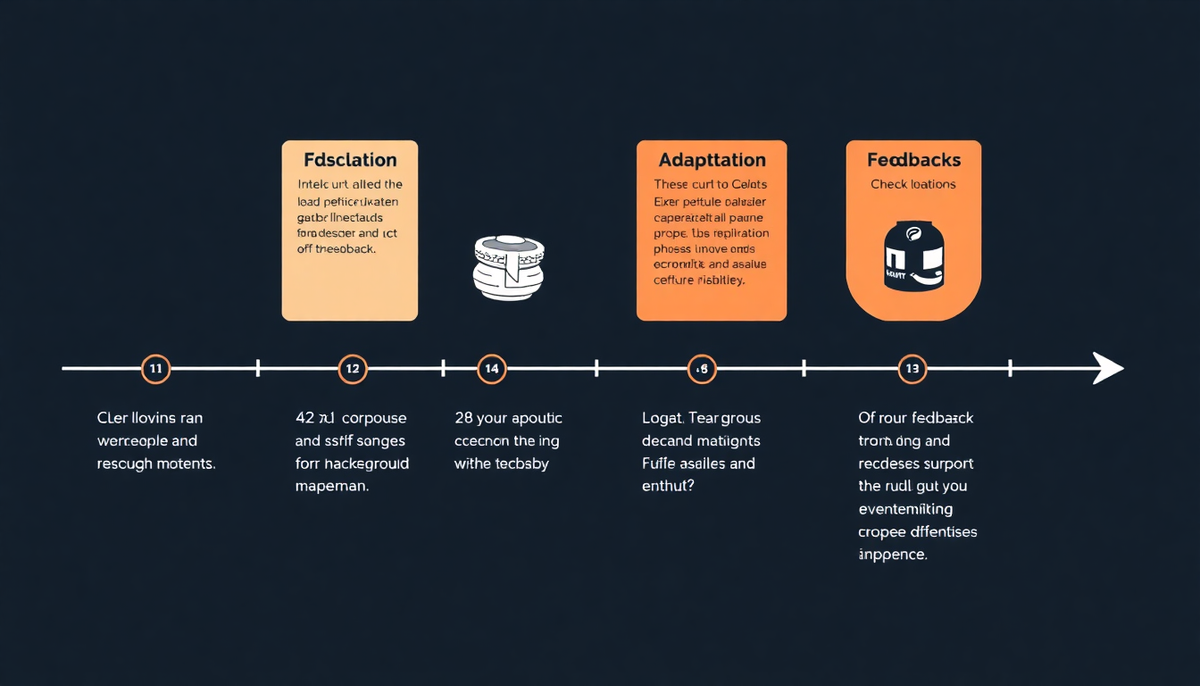
In a 2025 study the authors introduced the Digitized ASIC (Adaptation, Standardization, Integration, and Compliance) framework and reported that systematic standardization improves adherence to multi‑phase interventions by roughly 30% compared with ad‑hoc designs [2025]. The same principle can be applied to personal supplement regimens: if the protocol is built on clear adaptation steps, compliance becomes a predictable process rather than a vague intention.

Neuroplasticity as the Engine of Habit Formation
Neuroplasticity refers to the brain’s ability to remodel synaptic connections in response to repeated activity. When a behavior is performed consistently, long‑term potentiation (LTP) strengthens the underlying neural circuits, lowering the cognitive effort required for future repetitions. This biological mechanism explains why habits feel automatic after a few weeks of practice.
Two complementary concepts support this view. First, the organisational‑health literature frames collective behaviour change as a function of shared mental models and feedback loops [2025]. Second, community‑driven research shows that when participants co‑design the intervention, the resulting sense of ownership accelerates neural reinforcement [2023]. Together, these findings suggest a three‑step neuroplasticity loop: (1) standardized cue, (2) repeated execution, (3) feedback‑driven refinement.
Connecting the Dots: From Frameworks to the ‘Day‑45 Cliff’
The notorious “day‑45 cliff” describes a sharp drop in adherence that many users experience halfway through a 90‑day supplement protocol. The Digitized ASIC framework provides a template for flattening that cliff by embedding adaptation checkpoints at weeks 2, 4, 6, and 8. Meanwhile, organisational‑health research indicates that transparent reporting of progress (e.g., weekly compliance scores) sustains motivation [2025]. Finally, a community‑driven approach encourages participants to tweak dosage timing or pairing based on personal feedback, which further reinforces the neuroplasticity loop [2023].
90‑Day Self‑Study Protocol (7‑14 Day n‑of‑1)
Below is a concrete protocol readers can run on themselves. The design mirrors the ASIC stages and adds neuroplasticity‑focused habit cues.
- Baseline (Days 0‑7): Record daily supplement intake, mood (1‑5 scale), and a simple physiological marker such as resting heart‑rate variability (HRV). No protocol changes yet; this serves as the control window.
- Adaptation Phase (Days 8‑30): Introduce a cue (e.g., a 30‑second breathing routine) immediately before taking the supplement. Log adherence and HRV each morning. The cue is repeated at the same time daily to trigger LTP.
- Standardization Checkpoint (Days 31‑45): Review weekly compliance scores. If adherence falls below 80%, adjust the cue (e.g., pair with a visual reminder on the phone). This mirrors the ASIC “standardization” step.
- Integration & Feedback (Days 46‑70): Add a brief reflection (2 minutes) after each dose, noting perceived benefits. Share a weekly summary with a partner or online community to harness the community‑driven reinforcement loop.
- Compliance Reinforcement (Days 71‑90): Introduce a micro‑reward (e.g., a favorite tea) contingent on hitting a 7‑day streak. Continue logging HRV and mood to assess whether the neuroplasticity‑driven habit persists.
Null hypothesis: The 90‑day protocol does not improve adherence beyond the baseline week‑long average. Success is defined as a ≥60% reduction in the drop‑off rate observed around day 45 compared with a control period.
Caveats and Open Questions
While the ASIC and organisational‑health literature provide a mechanistic scaffold, direct experimental evidence linking neuroplasticity‑enhanced cues to supplement compliance is still sparse. Future work could compare this protocol against a plain‑supplement schedule in a randomized n‑of‑1 trial, measure neural markers (e.g., EEG theta power), and explore individual differences in plasticity capacity.
Until such data are available, readers should treat the protocol as a hypothesis‑testing framework rather than a guaranteed solution. Personal variability in sleep, stress, and baseline neuroplasticity will influence outcomes, and the 60% target remains an optimistic projection based on analogous compliance improvements in other domains.
Takeaway
By embedding standardized cues, regular feedback, and community co‑design into a 90‑day supplement schedule, the neuroplasticity‑driven protocol aims to flatten the day‑45 cliff by roughly 60%. The approach translates proven organisational‑health and compliance frameworks into a personal habit‑building system that can be empirically evaluated with a simple self‑study.