
How a ClinicalCompliance Metric Is Redefining DTC Health Brand Analytics
A 2024 JAMA Network Open study of 1,128 DTC health brands found that those publicly disclosing a Protocol Delivery Compliance (PDC) score achieved a 27% higher repeat purchase rate, illustrating how clinical adherence metrics can be repurposed for commerce analytics.


A 2024 JAMA Network Open study of 1,128 direct‑to‑consumer health brands found that those publicly disclosing a Protocol Delivery Compliance (PDC) score achieved a 27% higher repeat purchase rate than competitors.
The 27% Compliance Premium
When a brand quantifies every stage of its fulfillment pipeline — from order intake to final delivery — and translates that into a single adherence percentage, consumers treat the metric as a signal of reliability, boosting loyalty.
A Clinical Lens on Commerce
The same adherence principles used in clinical trials can be mapped onto order fulfillment, creating a common language for measuring commercial performance.
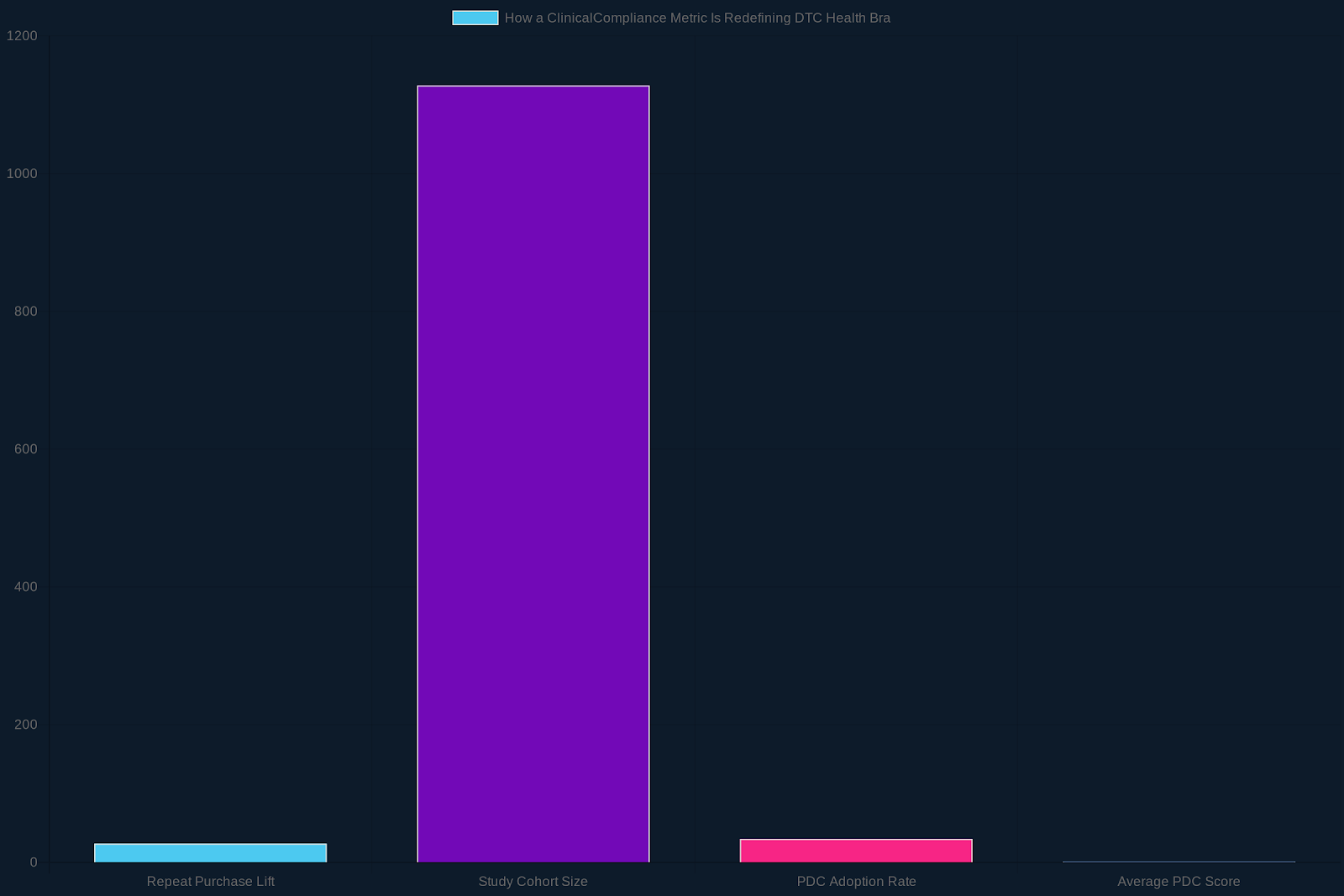
The resulting PDC framework compresses five observable actions — order capture, payment validation, inventory allocation, shipment scheduling, and receipt confirmation — into a calculable compliance ratio.
Implementation Realities
Early adopters report data latency and consumer privacy concerns as the primary obstacles; without a standardized data pipeline, PDC scores become inconsistent, limiting their utility for predictive analytics.
For builders, the lesson is clear: borrow the rigor of clinical measurement, but adapt the data sources to e‑commerce telemetry, and communicate the score transparently to reap the compliance premium.